
Do you ever heal from a breakup?
In May 2024, my life split in two. What followed was not just heartbreak, but illness, grief, and the slow realization that some losses do not disappear. They simply change shape, becoming scars you learn to carry.
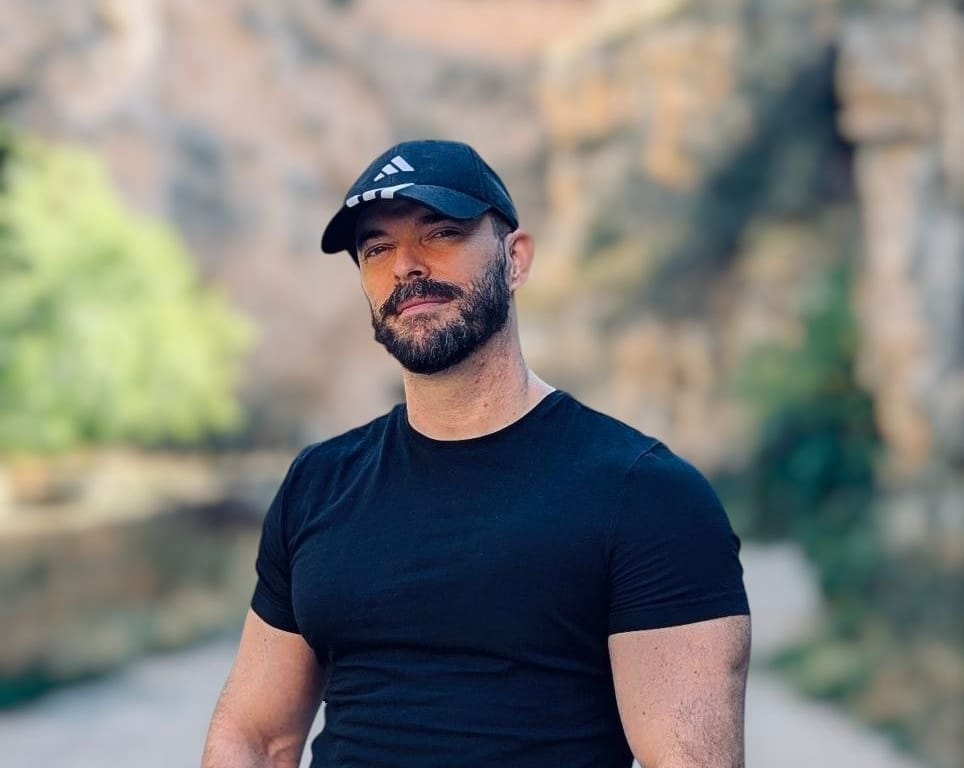
In May 2024, my life changed radically.
I was living in Lisbon with my partner. We had spent nearly ten years traveling the world together, and after a particularly turbulent final stretch, we decided to settle down for a while in Portugal.
Life was not perfect, and perhaps neither was the relationship, yet when I look back, what remains is a deep sense of nostalgia. We had an apartment close to the river, in the Alcântara neighborhood, and on weekends we would go to Cascais, to our favorite restaurant, Somos um Regalo—a place where the simplicity was part of its charm. You could only order piri-piri chicken—extra spicy, of course—fries, salad, and rice… and, almost as a ritual, the world's best bolo de bolacha, a traditional Portuguese dessert.
After lunch, we would order coffee to go and walk along the riverside until we reached a set of stone steps by the shore. We would sit there, sipping our coffee, letting the warmth of the sun slowly fade into evening, before catching the train back home. There was something quietly complete about those moments.
One day, my husband broke up with me, ending a thirteen-year relationship and shattering my life into pieces.
Do you ever truly heal from a breakup?
Today, I watched a talk by Guy Winch about how to fix a broken heart. Among other things, he suggests making a list of the negative aspects of our exes and keeping it close at hand, so that whenever we begin to idealize them, we can remind ourselves of reality. He also argues that no explanation for a breakup will ever feel fully satisfying.
Having gone through a very difficult breakup—and still being in therapy years later—I have heard these same suggestions from my therapist.
They didn’t work for me.
As I listened, I found myself thinking instead about Brianna Wiest and her essay How the people we once loved become strangers again. It made me wonder whether we ever truly heal from a broken heart, or whether the scars simply remain with us, reshaped but never erased.
The Break Up
At the time, my husband and I had decided to spend a week apart. We were going through a stressful period in our business, and I was struggling with severe depression and anxiety. I traveled to Sofia, hoping to disconnect and focus on composing music for the Alma Alter theater, while he embarked on an exciting train journey from Lisbon to Estonia, meeting entrepreneurs and nomads along the way.
I framed that time apart as a test—an opportunity to understand whether our love was still strong enough, whether it was something we were both willing to fight for.
During my stay in Bulgaria, I came to a painful clarity: I missed him deeply, and more than that, I wanted to be with him. I returned with a sense of certainty, determined to tell him how much I loved him.
I arrived a couple of days earlier and called him the next day. I told him everything I felt, everything I had come to understand in his absence. But his conclusion was the opposite. The relationship, for him, had become a source of pain, and he believed it was time for us to part ways.
That moment broke something in me.
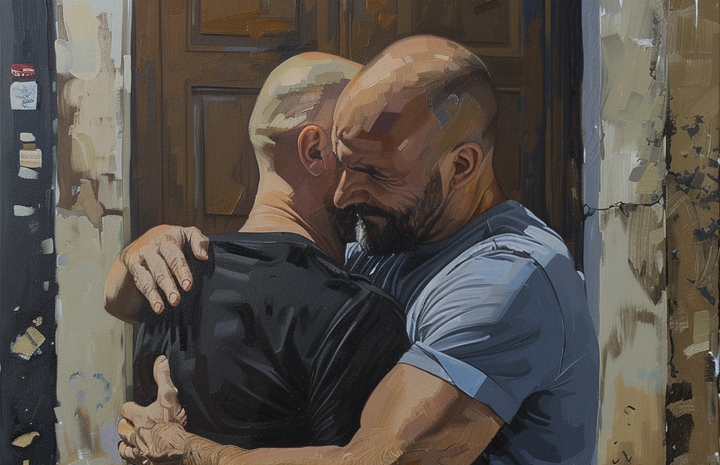
His flight arrived the following day, and I went to the airport to meet him, holding two coffees in my hands. When he walked out, I asked if I could hug him. He said yes. I held him, convinced—perhaps irrationally—that if I could just keep him in my arms, everything might still be okay.
But it wasn’t.
We had the conversation at home, and a few days later, while we were still living in the same apartment, I made a decision. Even though the rental agreement was under my name, even though I had bought most of the furniture and built a circle of friends in Lisbon, I left. I couldn’t stay there any longer, waiting for him to make a move, seeing him every day, sharing the same bedroom while everything between us had already ended.
Tossed Around
What followed felt like an ordeal.
I returned to Sofia and stayed there for a while, until I was diagnosed with prostate cancer. Soon after, I moved to Madrid to undergo treatment. That process added another layer of pain on top of everything else. I was sick, alone, and heartbroken.
The first months were devastating. I felt completely broken. The pain was so intense it almost seemed physical, as though grief had taken on a tangible form within my body.
To make matters worse, we shared a business, which meant I was forced to meet regularly with the person I still loved so deeply. We would talk about work, about numbers, about decisions, pretending—at least on the surface—that everything was normal. But seeing his face, hearing his voice, maintaining that illusion—it destroyed me. After each meeting, I would close the laptop and collapse into tears, sometimes crying until exhaustion took over.
I was in denial.
There were days when I couldn’t even open my laptop, and others when I couldn’t get out of bed. Most days, the grief would surface unexpectedly, triggered by the smallest details: a memory, a habit, a shared joke, the quiet absence of someone who used to be there. Cooking for one instead of two. Living a life that suddenly felt incomplete.
After moving to Madrid to get treated, things got worse.
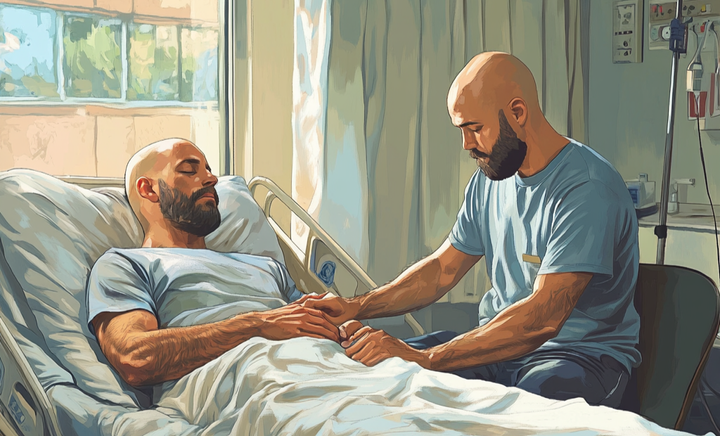
One of the moments that will remain with me forever is waking up in the hospital after my first exploratory surgery. While I was under anesthesia, I dreamed that he was there, sitting beside me, holding my hand. When I woke up, I was alone.
Anger Didn’t Work For Me
Just like Guy Winch proposes in his TED talk, my therapist suggested that I make a list of negative things about my ex—one each day. I tried, but I couldn’t do it.
It wasn’t because I was idealizing him. Enough time had passed, and we had had difficult, even uncomfortable conversations. He had hurt me. There were things he had done—and things he hadn’t done—that left deep scars. And yet, even now, I would struggle to write that list.
He is not perfect. But neither am I.
My therapist also encouraged me to feel anger—not necessarily toward him, but toward what had happened, toward what could have been handled differently. It is often described as a necessary phase of grief.
But I couldn’t access it. What I felt was not anger, but emptiness. Not rage, but absence. A void.
And that made me think again of Brianna Wiest. Perhaps she is right. Perhaps when you love someone deeply enough—and I loved him more than anyone before—you don’t simply stop loving them. He collided with me and reshaped my entire universe. In many ways, he was my universe, and I was his. I wanted to grow old with him. And once you reach that point, it is no longer just something you feel or believe—it becomes something you are.
Get Your “Why”
There is one point where my experience diverges from what is often advised: the importance of understanding why.
After a year, Miguel and I met again in Lisbon for a company teambuilding event. The day before leaving, I asked to see him. I needed answers.
For a long time, I had not known why he had broken up with me, and in that absence, my mind created its own explanations—often harsh, often self-directed. I convinced myself that I had taken him away from his family and friends, that I had forced him into a nomadic life he did not truly want, that I had isolated him, frustrated his dreams, become someone he no longer recognized.
All these thoughts had one thing in common: blame.
I blamed myself for everything. I carried the entire weight of the relationship’s failure on my shoulders, without truly understanding what had gone wrong.
When we spoke that afternoon, things began to shift. Some of the beliefs I had held onto were not true at all—he had even thought I had cheated on him. Other issues could have been avoided with better communication.
What mattered most was the realization that responsibility was shared. I could have done many things better, yes—but so could he. There was no single point of failure, no single person to blame.
That realization marked a turning point for me.
Understanding that I was not solely responsible was, perhaps, the most important step in my healing process.
Acceptance?
If I had to describe where I am now, I would say I have reached a form of acceptance.
That doesn’t mean I am happy. It simply means I am… okay.
I still have nightmares. I still wake up some days with tears in my eyes, carrying a heaviness that lingers throughout the day. But these moments are less frequent now. The sudden waves of grief no longer arrive without warning. I can even look back at some of the memories we shared with a certain softness.
I have even started seeing someone else, cautiously, trying to rebuild something, or at least to reconnect with that part of myself.
And yet, deep inside, there is still a quiet certainty that something broke that day in May, and that it will never fully be repaired.
My therapist confirmed as much. When I asked her whether I would ever stop grieving, she told me that I probably wouldn’t. That wound will remain with me. It will resurface from time to time—in memories, in places, in fleeting moments: a meal in Cascais, a walk by the river, that last day at the beach in Tavira.
The goal, she said, is not to erase the wound, but to transform it into a scar.
It will always be there, a reminder of what happened, but the pain it carries will become manageable. Perhaps, with time, even something you can look at with a certain tenderness.
The Love That Remains
We all change.
The person you once loved so deeply is no longer there, at least not in the same way. And that’s alright. You are no longer the same person either.
We all have the right to change, to evolve, to move forward.
Perhaps we do not continue loving them in the present, but rather the version of them that existed when they were with us—the memory, the shared moments, the way they made us feel. A kind of ghost that lingers quietly within us. And in that sense, I find myself agreeing with Brianna Wiest.
You never truly stop loving them.
Comments ()